In the rarefied world of ultra-luxury skincare, texture has evolved from a formulation afterthought to the very essence of prestige positioning. The way a serum glides across skin, how a cream melts upon contact, or the silken finish a product imparts—these sensorial moments define the contemporary luxury beauty experience and justify premium price points in an increasingly discerning marketplace.
The Science of Sensorial Excellence
Texture engineering in prestige formulations represents a sophisticated intersection of rheology, polymer chemistry, and psychophysics. Unlike mass-market products where cost constraints often dictate ingredient hierarchies, luxury skincare development prioritises sensory performance alongside efficacy. This approach requires intimate understanding of how emulsifiers, rheology modifiers, and sensory enhancers interact to create distinctive tactile signatures.
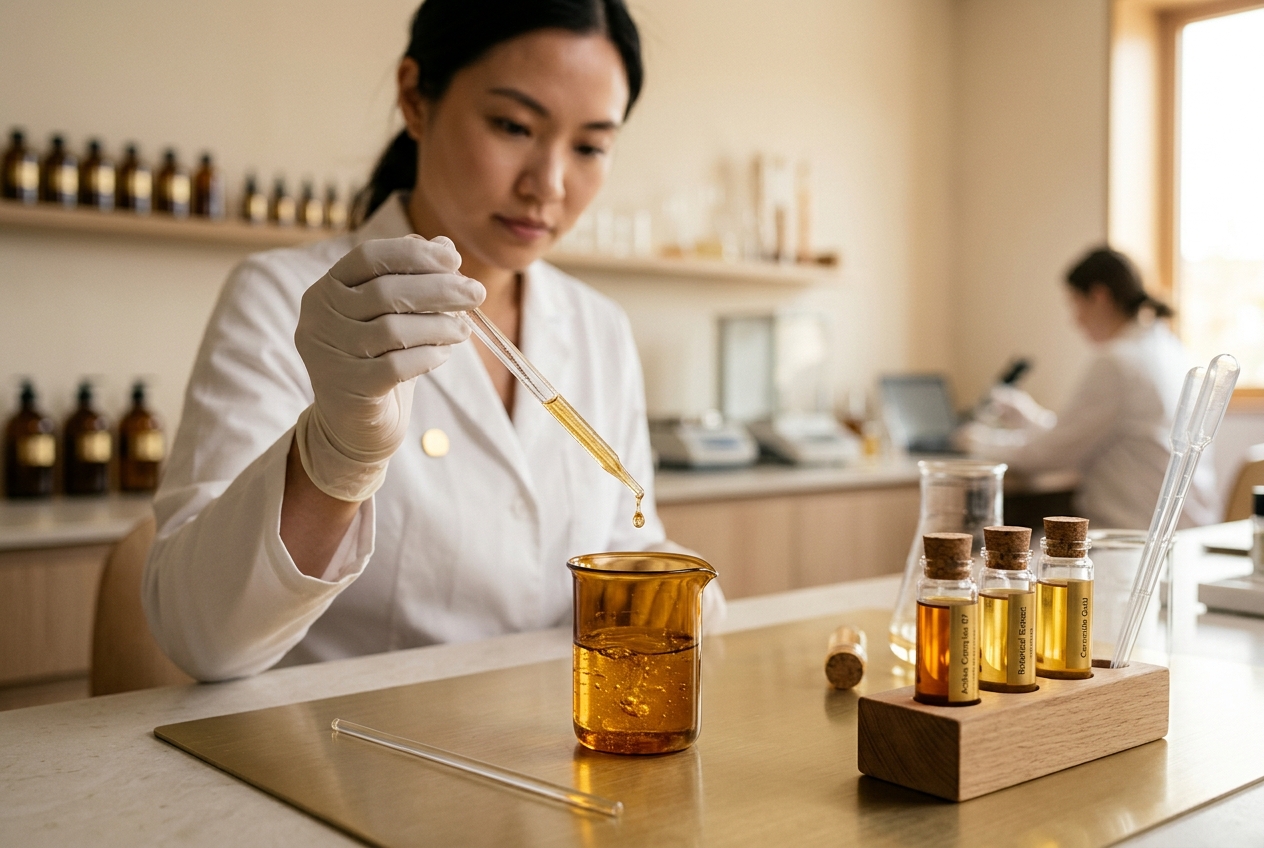
Modern luxury brands collaborate with specialised contract manufacturing partners who maintain dedicated sensory laboratories equipped with texture analysers, tribometers, and trained sensory panels. These facilities quantify previously subjective attributes—spreadability coefficients, pick-up force measurements, and absorption rates—transforming artisanal formulation into reproducible science.
Rheology Modifiers: The Architects of Touch
At the heart of texture design lie rheology modifiers, sophisticated ingredients that govern flow behaviour and structural properties. Natural polysaccharides such as biosaccharides gum-1, sclerotium gum, and acacia senegal gum deliver the plush, bouncy textures now synonymous with K-beauty influenced luxury products. These ingredients create yield-stress systems: formulations that hold their structure until shear force is applied, then transform into silky, spreadable emulsions.
Silicon alternatives have emerged as particular status symbols within prestige formulations. While cyclopentasiloxane and dimethicone remain workhorses for their unparalleled slip and instant skin-smoothing effects, luxury brands increasingly showcase plant-derived alternatives. Hemisqualane, coco-caprylate/caprate, and specialised esters like C12-15 alkyl benzoate offer comparable sensory profiles whilst appealing to the clean beauty segment willing to pay premium prices for botanical provenance.
Layered Sensory Experiences
The most sophisticated prestige formulations engineer multi-phase sensory journeys. Initial texture upon dispensing, transformation during application, immediate after-feel, and long-term skin finish each require deliberate design. Japanese luxury brands particularly excel at this choreography, creating products that shift from rich balm to lightweight oil to imperceptible film within seconds of application.
This temporal dimension necessitates careful selection of emulsion systems. Gel-cream hybrids utilising both oil-in-water and water-in-oil technologies in stratified layers deliver the cooling freshness consumers associate with hydration alongside the nourishing richness that signals luxury. Advanced manufacturing techniques including phase inversion temperature methods and liquid crystal emulsification create the stable yet dynamic structures these experiences require.
Powder Technology and Sensory Refinement
The integration of sophisticated powder technologies distinguishes prestige formulations from conventional alternatives. Spherical powder systems—silica microspheres, polymethylsilsesquioxane, and nylon-12—create the optical blurring and immediate mattification that photograph beautifully whilst imparting that coveted velvety after-touch. These powders work synergistically with film-forming polymers to engineer the 'cashmere skin' effect now expected in luxury day creams and primers.
Particle size distribution proves critical. Luxury formulations typically specify narrow distributions with mean particle sizes between 2-10 microns—small enough to avoid grittiness yet large enough to scatter light effectively. This precision requires specialised milling equipment and rigorous quality control protocols that prestige brands demand from manufacturing partners.
Active Ingredient Integration Without Sensory Compromise
Perhaps the greatest technical challenge in luxury formulation lies in incorporating high concentrations of actives whilst maintaining impeccable texture. Retinoids, vitamin C derivatives, and peptides can disrupt emulsion stability and create undesirable tactile properties. Prestige brands justify their pricing partially through solving these incompatibilities.
Encapsulation technologies—liposomal delivery systems, biomimetic vesicles, and cyclodextrin complexes—serve dual purposes in luxury products. Beyond enhancing active stability and penetration, these systems mask unpleasant raw material textures and allow formulators to achieve the clean, refined sensory profiles luxury consumers expect. The latest innovations in this space include pickering emulsions stabilised by solid particles rather than traditional surfactants, delivering unprecedented skin-feel alongside sustainability credentials.
Fragrance as Textural Extension
In prestige skincare, fragrance functions as more than olfactory pleasure—it extends and amplifies textural perception. The phenomenon of cross-modal sensory interaction means that carefully composed fragrances literally change how consumers perceive product texture. Light, fresh aldehydic notes enhance perceived freshness and fast absorption, whilst warm musks and ambers increase perceived richness and emollience.
Luxury brands commission bespoke fragrance compositions from prestigious fragrance houses, ensuring scent profiles align precisely with textural positioning. This represents significant investment—prestige fragrance oils can cost twenty times more than functional alternatives—but proves essential to holistic sensory branding.
The Future of Prestige Texture
Emerging trends suggest texture innovation will increasingly drive luxury differentiation. Biomimetic formulations that replicate skin's own lipid structures using sophisticated ceramide complexes and structured water systems promise both efficacy and unprecedented skin compatibility. Smart textures incorporating temperature-sensitive polymers and shear-responsive materials will offer personalised sensory experiences adapting to individual application techniques.
The convergence of sensory science and sustainable formulation presents both challenge and opportunity. Luxury consumers increasingly demand environmental responsibility alongside sensorial excellence, pushing prestige brands and their manufacturing partners toward novel botanical extracts, fermentation-derived ingredients, and ocean-safe formulation architectures that maintain the textural sophistication they've come to expect.
For those seeking to experience formulations where texture has been elevated to art form, our Wellmax & Maxwell collections showcase how advanced sensory design translates into daily luxury rituals.
Partner with texture specialists who understand that in prestige skincare, how a product feels is as important as what it does. Contact our sensory formulation team to discuss how we can translate your brand's vision into unforgettable tactile experiences that command premium positioning and build lasting customer loyalty.