The ultra-luxury cosmetics sector stands at an inflection point where technological sophistication meets artisanal craftsmanship. Hyper-personalisation—the creation of cosmetic products tailored to individual genetic profiles, environmental factors, and aesthetic preferences—has evolved from a niche offering into an expectation amongst discerning consumers willing to invest in bespoke beauty solutions. This paradigm shift represents not merely customisation of packaging or fragrance, but fundamental alterations to product formulation at the molecular level.
The Evolution Beyond Mass Customisation
Traditional cosmetics development has long operated on the principle of broad demographic segmentation: products for 'dry skin', 'mature skin', or 'sensitive skin'. Hyper-personalisation dismantles these reductive categories entirely. Contemporary made-to-order luxury cosmetics consider dozens of variables simultaneously—skin microbiome composition, transepidermal water loss rates, sebum production patterns, pigmentation irregularities, and even circadian rhythm influences on dermal function.
This granular approach necessitates sophisticated diagnostic technologies. Leading prestige houses now employ artificial intelligence algorithms that analyse high-resolution skin imaging, cross-referencing this data against environmental factors such as UV exposure, pollution indices, and climate conditions specific to the client's geographical location. The resulting formulations are singular creations, manufactured in small batches or even individual units.
Technology Driving Bespoke Formulation
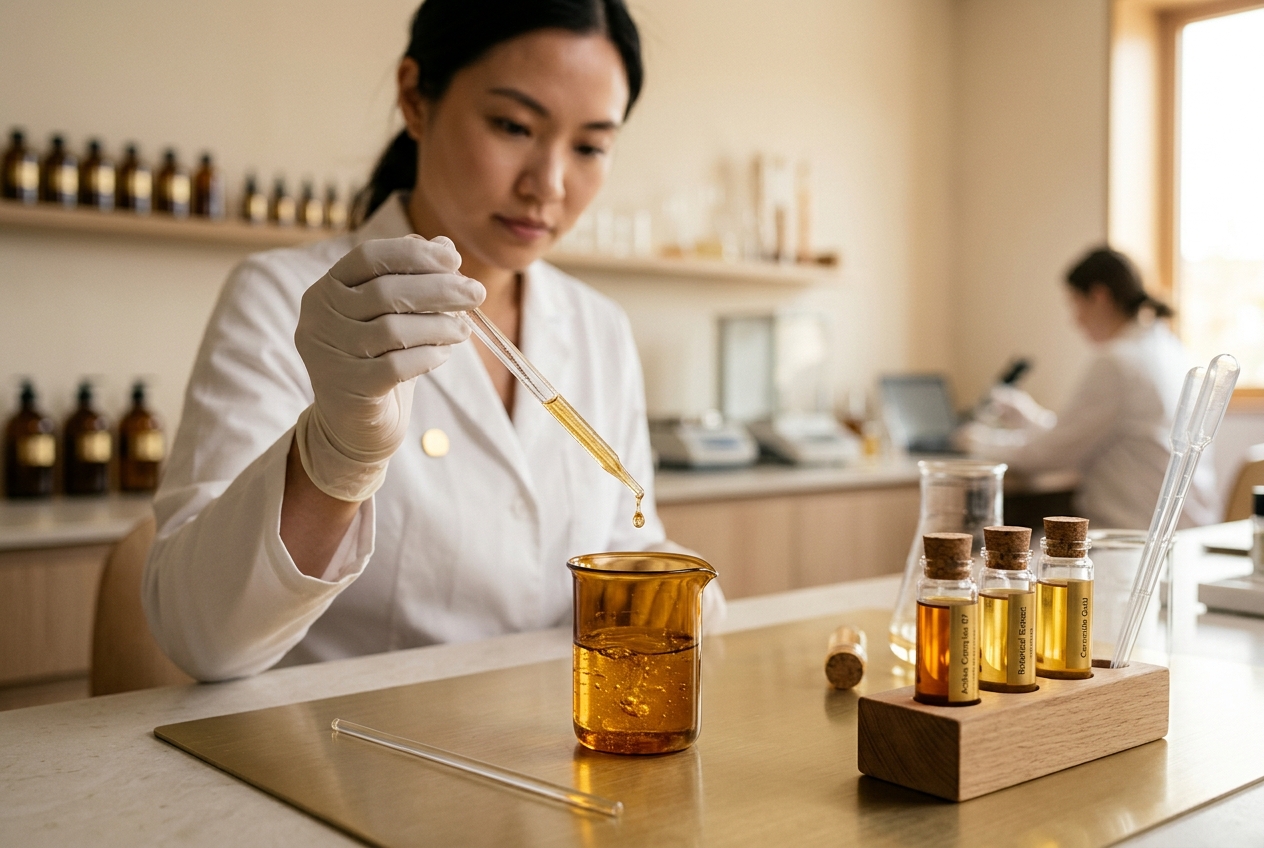
The technical infrastructure enabling hyper-personalisation extends far beyond consumer-facing applications. Advanced contract manufacturing facilities must maintain extensive ingredient libraries—often encompassing hundreds of active compounds, botanical extracts, and delivery system technologies—alongside flexible production capabilities that accommodate batch sizes ranging from 50 units to single bottles.
Diagnostic Precision
Contemporary skin analysis platforms utilise multi-spectral imaging, measuring not only surface conditions but subsurface structures including collagen density and vascular patterns. Some luxury brands have introduced genetic testing panels that identify predispositions to oxidative stress, glycation, or inflammation—enabling prophylactic formulation strategies rather than reactive treatments.
Formulation Agility
Made-to-order production requires manufacturing systems capable of rapid formulation adjustments whilst maintaining pharmaceutical-grade quality standards. ISO 22716-certified facilities employ modular production lines where active ingredient concentrations can be calibrated precisely for individual orders. This demands rigorous batch documentation, stability testing protocols adapted for micro-batches, and preservation systems that maintain efficacy without standard preservative concentrations.
The Luxury Consumer Perspective
Ultra-high-net-worth individuals increasingly view personalised cosmetics as an extension of existing bespoke services—analogous to Savile Row tailoring or commissioned fine jewellery. The value proposition transcends efficacy alone; it encompasses exclusivity, the assurance of formulation uniqueness, and the experiential journey from consultation through delivery.
Prestige beauty houses report that clients commissioning personalised formulations demonstrate significantly higher lifetime values and brand loyalty metrics compared to those purchasing off-the-shelf luxury products. The consultation process itself becomes a luxury service, often conducted in private appointments with cosmetic chemists or dermatological specialists.
Regulatory and Quality Considerations
The bespoke cosmetics sector operates within complex regulatory frameworks. Each personalised formulation technically constitutes a unique product, raising questions about safety assessment requirements, ingredient disclosure obligations, and post-market surveillance. Reputable manufacturers address these challenges through comprehensive ingredient pre-qualification, where every component in the formulation library undergoes complete safety and compatibility testing before inclusion in any personalised product.
GMP compliance becomes particularly critical in made-to-order manufacturing, where the absence of large-scale production runs eliminates the statistical quality assurance inherent in mass production. Each micro-batch requires individual verification, necessitating automated quality control systems that can validate formulation accuracy, microbiological safety, and stability indicators efficiently.
Sustainability Challenges and Innovations
Hyper-personalisation presents distinct sustainability considerations. Small-batch production typically generates higher per-unit carbon footprints due to reduced manufacturing efficiencies. However, the model simultaneously eliminates overproduction and reduces waste from unsold inventory—a persistent issue in conventional beauty retail.
Forward-thinking luxury brands address these contradictions through localised production networks, reducing shipping distances, and implementing refill programmes where clients reorder their specific formulations in sustainable packaging. Some manufacturers have introduced modular systems where a personalised active serum concentrate is combined with a standardised base, optimising the balance between customisation and production efficiency.
Commercial Viability and Market Positioning
The economics of made-to-order luxury cosmetics require careful calibration. Production costs substantially exceed those of conventional manufacturing, necessitating premium pricing strategies. Successful programmes typically target price points of £200-£800 for facial skincare products, positioning them within the ultra-prestige segment where consumers expect and accept such valuations for genuinely differentiated offerings.
Brands like Wellmax & Maxwell demonstrate that transparent communication about formulation science, ingredient provenance, and manufacturing standards justifies premium positioning. Educated luxury consumers increasingly appreciate the technical sophistication underlying personalised products, particularly when manufacturers provide detailed formulation breakdowns and ongoing consultation support.
Future Trajectories
The convergence of biotechnology, artificial intelligence, and advanced manufacturing suggests that hyper-personalisation will become increasingly sophisticated. Emerging technologies include real-time skin monitoring devices that transmit data enabling dynamic formulation adjustments, 3D-printed delivery systems customised to individual facial topography, and microbiome-modulating formulations tailored to personal bacterial profiles.
As analytical costs decline and manufacturing systems become more flexible, the economic threshold for personalisation will lower, potentially expanding the addressable market beyond ultra-luxury into premium segments. However, the cachet of true bespoke formulation—involving human expertise, consultation, and artisanal production values—will likely remain the preserve of luxury markets.
ARGE Cosmetics specialises in crafting bespoke formulations for discerning brands seeking to enter the hyper-personalisation space. Our GMP-certified facilities combine cutting-edge formulation capabilities with flexible production systems designed for made-to-order luxury. Contact our technical team to explore how we can translate your vision for personalised beauty into commercially viable, regulatory-compliant products that resonate with today's sophisticated consumers.