
The luxury skincare sector has witnessed a remarkable transformation in recent years, with peptide technology emerging as the cornerstone of next-generation serum formulations. These sophisticated bioactive molecules have transcended their initial positioning as anti-ageing actives to become multifunctional ingredients that address concerns from barrier repair to pigmentation control, commanding premium price points in the ultra-luxury market.
Understanding Peptide Architecture in Cosmetic Science
Peptides are short chains of amino acids—the fundamental building blocks of proteins—typically containing between two and fifty amino acid residues connected by peptide bonds. In cosmetic formulations, these molecules function as cellular messengers, communicating specific instructions to skin cells and triggering targeted biological responses. Unlike larger proteins such as collagen, which cannot effectively penetrate the stratum corneum due to their molecular size, carefully designed peptides possess the optimal molecular weight and structure to traverse the skin barrier and exert their effects at the cellular level.
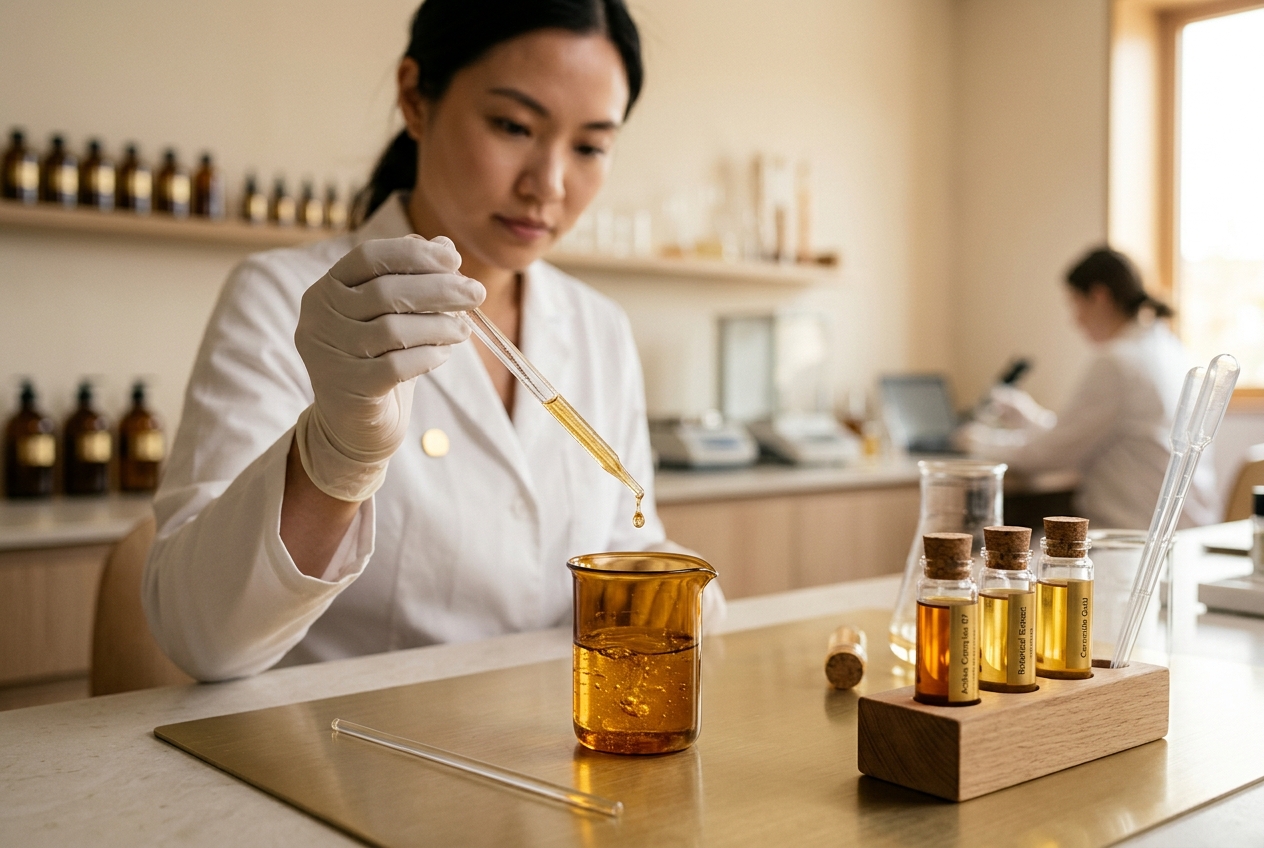
The efficacy of peptides in luxury formulations depends critically upon their sequence specificity, three-dimensional configuration, and stability within the delivery system. Premium contract manufacturing facilities now employ advanced analytical techniques including mass spectrometry and circular dichroism to verify peptide identity, purity, and conformational integrity throughout the production process.
Classification of Cosmetic Peptides
Contemporary luxury serums typically incorporate one or more peptide categories, each offering distinct mechanisms of action. Signal peptides, such as palmitoyl oligopeptides, stimulate fibroblast activity and promote the synthesis of extracellular matrix components including collagen, elastin, and glycosaminoglycans. These molecules essentially activate the skin's natural repair processes, making them particularly valued in prestige anti-ageing formulations.
Neurotransmitter-inhibiting peptides represent another significant category, functioning through a different paradigm. Acetyl hexapeptide-8, perhaps the most recognised example, modulates the SNARE complex responsible for acetylcholine release at the neuromuscular junction, thereby reducing expression-related lines. Whilst some marketing narratives have overstated these effects, clinical evaluation has demonstrated measurable improvements in fine line appearance when these peptides are incorporated at appropriate concentrations.
Carrier peptides facilitate the delivery of essential trace elements, particularly copper, which serves as a cofactor in numerous enzymatic processes crucial for wound healing and tissue remodelling. Copper tripeptide-1 has demonstrated particular promise in luxury formulations, with its role extending beyond simple metal transport to encompass anti-inflammatory and antioxidant properties.
Enzyme-inhibiting peptides have gained prominence in addressing hyperpigmentation and photoageing. By modulating tyrosinase activity or matrix metalloproteinases, these molecules offer targeted intervention in specific biochemical pathways, positioning them as sophisticated alternatives to traditional actives in ultra-luxury brightening serums.
Formulation Challenges and Solutions
Despite their remarkable potential, peptides present significant formulation challenges that distinguish luxury products from mass-market alternatives. Peptide stability remains paramount—these molecules are susceptible to hydrolysis, oxidation, and enzymatic degradation. Premium formulations address these concerns through multiple strategies: pH optimisation (typically between 4.5 and 6.5), incorporation of chelating agents to sequester metal ions that catalyse degradation, and the use of sophisticated preservation systems that maintain antimicrobial efficacy without compromising peptide integrity.
The solubility profile of peptides varies considerably based on their amino acid composition and modifications. Whilst some peptides are water-soluble, others require careful selection of co-solvents or incorporation into lipid-based delivery systems. Advanced formulations may employ encapsulation technologies—liposomes, niosomes, or solid lipid nanoparticles—to enhance peptide stability, control release kinetics, and improve dermal penetration.
Synergistic Combinations in Ultra-Luxury Serums
The most sophisticated luxury serums rarely rely upon a single peptide. Instead, formulators create intelligent combinations that target multiple aspects of skin ageing through complementary mechanisms. A prestige serum might combine a signal peptide to stimulate collagen synthesis, a neurotransmitter-inhibiting peptide to address dynamic lines, and an enzyme-inhibiting peptide to prevent matrix degradation—creating a comprehensive approach to skin rejuvenation.
Furthermore, luxury formulations increasingly pair peptides with other premium actives. Growth factors, which share structural similarities with certain peptides, can be incorporated to amplify cellular communication. Antioxidant systems protect both the peptides themselves and the cellular targets from oxidative stress. Hyaluronic acid of varying molecular weights provides immediate hydration whilst supporting the long-term matrix-building effects of signal peptides.
Emerging Peptide Technologies
The frontier of peptide innovation extends beyond naturally derived sequences to encompass biomimetic and fully synthetic designs. Researchers are developing peptides that mimic the active domains of larger proteins, essentially creating molecular keys that unlock specific cellular responses with unprecedented precision. Cyclisation—forming circular peptide structures—enhances stability and receptor binding affinity, whilst lipidation (attaching fatty acid chains) improves membrane penetration and extends residence time within the skin.
Computational peptide design represents another exciting development, with machine learning algorithms now capable of predicting peptide activity and optimising sequences before synthesis. This approach accelerates the discovery process and enables the creation of entirely novel peptides tailored to specific skincare objectives, positioning the next generation of luxury serums at the intersection of biotechnology and cosmetic science.
Regulatory and Quality Considerations
The manufacture of peptide-based luxury serums demands rigorous quality systems and regulatory compliance. Peptide synthesis, purification, and characterisation require specialised expertise and equipment. GMP-certified facilities implementing ISO 22716 standards ensure that peptides meet stringent specifications for identity, purity, and potency. Analytical documentation, stability data, and safety assessments form essential components of the regulatory dossier supporting premium peptide formulations available through retailers like Wellmax & Maxwell.
The Future of Peptide Innovation
As our understanding of skin biology deepens and synthetic capabilities advance, peptide innovation will continue reshaping the luxury serum landscape. Personalised peptide selection based on genetic or epigenetic markers, peptides targeting newly discovered age-related pathways, and intelligent delivery systems that respond to skin conditions represent the trajectory of this dynamic field. For brands seeking to establish authority in the ultra-luxury segment, investment in cutting-edge peptide technology has transitioned from optional to essential.
Are you ready to develop a next-generation peptide serum that positions your brand at the forefront of luxury skincare innovation? Our team combines scientific expertise with manufacturing excellence to transform advanced peptide concepts into market-leading formulations. Contact us today to discuss how we can bring your vision to life.