The ultra-luxury cosmetics sector increasingly demands formulations that preserve the integrity of delicate, bioactive ingredients. Cold-processing has emerged as the gold standard for artisan cosmetic production, particularly when incorporating heat-sensitive actives that would otherwise degrade under conventional manufacturing conditions. This shift reflects both scientific advancement and consumer expectations for products that deliver genuine physiological benefits.
Understanding Heat-Sensitive Actives
Heat-sensitive actives encompass a broad spectrum of ingredients whose molecular structure, stability, or efficacy diminishes when exposed to elevated temperatures. Enzymes such as superoxide dismutase and bromelain lose their catalytic activity above 40°C, whilst peptides including matrixyl and argireline undergo conformational changes that compromise their signalling capabilities. Retinol, ascorbic acid, and many botanical extracts similarly suffer oxidative degradation when subjected to heat during manufacturing.
The challenge extends beyond simple thermal degradation. Many plant-derived actives contain volatile compounds—essential oils, terpenes, and phenolic constituents—that evaporate or transform chemically at temperatures commonly employed in traditional hot-process emulsification. Probiotics and their derivatives, increasingly popular in prestige skincare, remain viable only when processed below body temperature.
The Cold-Processing Advantage
Cold-processing methodology maintains formulation temperatures below 40°C throughout manufacturing, preserving the structural integrity and biological activity of sensitive ingredients. This approach requires sophisticated understanding of emulsion science, as traditional hot-process techniques rely on elevated temperatures to reduce viscosity, facilitate homogenisation, and ensure microbial safety.
Advanced contract manufacturing facilities employ several strategies to achieve stable cold-process emulsions. High-shear homogenisation at controlled temperatures creates fine droplet sizes without thermal input. Self-emulsifying wax systems, engineered to form stable emulsions at ambient temperature, replace conventional emulsifiers that require heat activation. Phase inversion temperature techniques exploit the thermodynamic properties of surfactant systems, allowing emulsion formation with minimal energy input.
Formulation Considerations
Developing cold-processed formulations demands meticulous attention to ingredient selection and processing sequences. Emulsifiers must possess sufficient activity at lower temperatures—cetearyl olivate and sorbitan olivate, for instance, perform admirably in cold systems. Preservation becomes more critical, as reduced thermal processing cannot contribute to microbial load reduction. Broad-spectrum preservative systems, validated through rigorous challenge testing, become essential.
Rheology modifiers that function without heat activation—carbomers, xanthan gum, and certain cellulose derivatives—provide texture and stability. However, achieving the luxurious sensory profiles expected in prestige products requires expertise. The absence of heat processing means viscosity development occurs entirely through mechanical action and careful pH adjustment rather than temperature-dependent structural formation.
Artisan Manufacturing Techniques
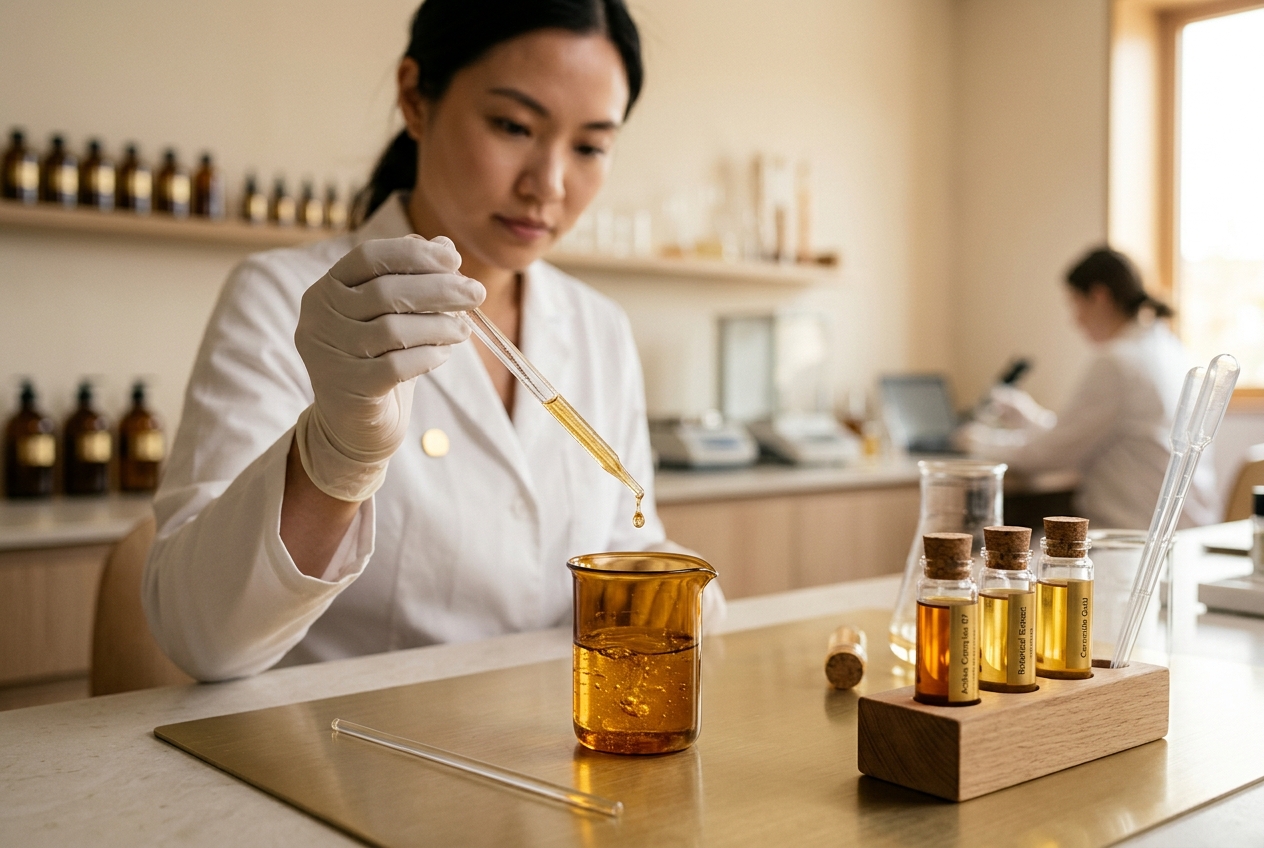
Small-batch artisan production naturally lends itself to cold-processing methodologies. The reduced scale allows for extended processing times without production efficiency concerns that constrain large-scale manufacturing. Artisan cosmetic houses frequently employ traditional techniques—hand-stirring, ambient-temperature infusions, and sequential ingredient addition—that naturally maintain lower processing temperatures.
This approach aligns with the values-driven purchasing decisions characteristic of ultra-luxury consumers. Transparency regarding manufacturing methods, emphasis on ingredient integrity, and demonstrable commitment to preserving active efficacy resonate powerfully with discerning clientele. Brands such as those in our Wellmax & Maxwell collection exemplify this philosophy, where formulation integrity supersedes production convenience.
Quality Control Imperatives
Cold-processed formulations necessitate enhanced quality assurance protocols. Stability testing must encompass extended timeframes and varied storage conditions, as emulsions formed without heat may exhibit different aging characteristics. Microbial testing assumes greater importance, with preservative efficacy testing conducted throughout the product lifecycle. Active ingredient assays verify that heat-sensitive components retain their concentration and activity through manufacturing and storage.
Market Positioning and Consumer Communication
The cold-processed designation serves as a powerful marketing differentiator in the ultra-luxury segment. Educated consumers recognise the technical sophistication and formulation compromises inherent in preserving delicate actives. This manufacturing methodology supports premium pricing structures whilst providing substantive justification beyond mere brand narrative.
Effective communication requires balancing technical credibility with accessibility. Brands must articulate the scientific rationale—thermal degradation, molecular instability, activity loss—whilst translating these concepts into tangible benefits: enhanced efficacy, superior results, uncompromised active delivery. Third-party testing and stability data provide compelling validation for discerning consumers.
Regulatory and Safety Considerations
Cold-processed cosmetics must satisfy identical safety standards as conventionally manufactured products. The absence of thermal processing does not diminish preservative requirements or microbial safety obligations. Indeed, manufacturers must demonstrate that alternative processing methods achieve equivalent or superior safety profiles. Documentation of time-temperature profiles, validation of cleaning procedures, and environmental monitoring become critical components of GMP compliance.
The increasing sophistication of cold-processing techniques, combined with growing consumer awareness of ingredient integrity, positions this methodology at the forefront of artisan luxury cosmetics. Brands that master these formulation challenges whilst maintaining rigorous safety standards will command premium positioning in an increasingly discerning marketplace. Whether developing bespoke formulations or selecting from established ranges, the cold-processed approach represents the confluence of scientific rigour and artisan craftsmanship that defines contemporary ultra-luxury skincare.
Interested in developing cold-processed formulations that preserve your most delicate actives? Our technical team specialises in artisan manufacturing techniques that prioritise ingredient integrity whilst meeting the highest safety and stability standards. Contact us to discuss how we can bring your vision to life.